
• Home
  • About Us
  • Warranty
  • Gallery
    • Mirror Doors and Walls Gallery
    • Aluminum Dividers Gallery
    • Shower Doors & Enclosures
    • Sliding Tub Doors Gallery
  • Blog
  • Contact Us
  • Privacy Policy

Keystone Home Products

Aluminum sliding dividers, closet organizers, frameless shower doors, closet doors, sliding doors, mirror walls, shower doors & enclosures in Toronto, Brampton, Mississauga

  • Glass & Mirror
  • Mirror Doors & Walls
  • Panel Doors
  • Aluminum Dividers
  • Glass Shower Doors
    • Shower Doors
    • Shower Enclosures
  • Wood Shelving
    • Closet Organizers
  • Wire Shelving
  • Privacy Policy
  • Frameless Shower Doors
  • Closet Organizers

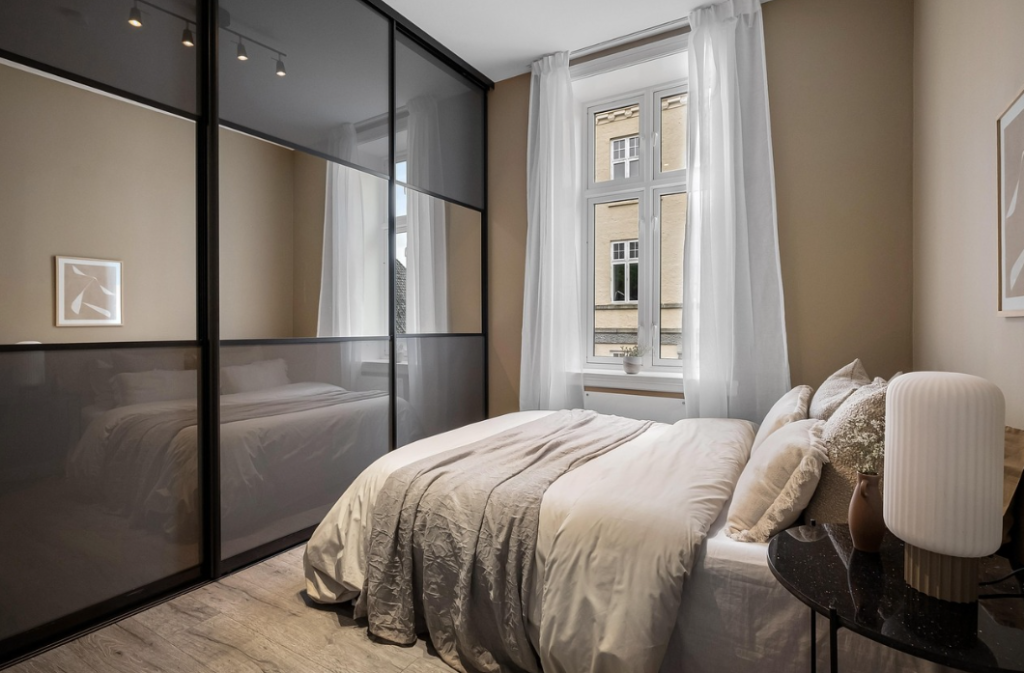
Make Tiny Bedrooms Feel Larger With Mirror Door Magic

mirror sliding door

A tiny bedroom does not need a knockout wall to feel bigger. Mirrored sliding doors trick the eye into seeing more space while adding light and function to a tight closet setup.

Why Small Rooms Feel Even Smaller

A cramped bedroom often feels worse than its actual size because of a few common design mistakes. Dark corners, bulky furniture, and closed-off closets all add to that boxed-in feeling.

Common culprits include:

  • Solid closet doors that block light and add visual weight
  • Bulky swing doors that eat up floor space when open
  • Dark or dated finishes that soak up light
  • Furniture placed without thought to sightlines

Fixing even one of these issues can shift how the whole room feels.

How Mirrors Trick the Eye

Mirrors work because they bounce light and reflect the room back on itself, doubling the sense of depth. A large mirrored surface on a closet door does this without adding a single extra inch of real space.

Reflected light and depth combine to make a small room read as far more open than its true square footage.

Benefits of this trick include:

  • More natural light bouncing around the room
  • A sense of depth where a wall used to feel flat
  • No lost floor space, since the mirror sits on the door itself
  • A built-in full-length mirror with zero extra footprint

Why Sliding Beats Swinging in Tight Rooms

Swing doors need open floor space to move through their arc. In a small bedroom, that swing radius often blocks a bed, dresser, or walking path.

Sliding doors solve this problem directly:

  • They glide along a track instead of swinging outward
  • No floor space gets eaten up by an open door
  • Furniture can sit closer to the closet without blocking access
  • The flat surface stays flush with the wall, adding a clean look

Sliding tracks free up floor space that a swinging door would otherwise claim, which matters most in a truly tight room.

Style Options Beyond Plain Glass

Mirrored doors do not have to mean one giant plain mirror. There are style choices that add function and visual interest while still keeping that light-bouncing benefit.

Style options include:

  • Framed mirror panels for a more finished look
  • Frosted or etched edges for a softer visual effect
  • Mixed panels, part mirror and part solid finish
  • Bronze or smoked-tone mirror finishes for a warmer feel

Choosing a style that fits the room’s overall look keeps the mirror feeling like part of the design, not an odd add-on.

Placement Tips That Maximize the Effect

Where a mirrored door sits in a room changes how much benefit it delivers. A poorly placed mirror can even create an odd reflection instead of a helpful one.

Placement tips to keep in mind:

  • Face the mirror toward a window to reflect natural light
  • Avoid placing it directly across from a messy or cluttered wall
  • Keep the mirror at a height that reflects the room, not just the ceiling
  • Pair with lighter wall colors to boost the light-bouncing effect further

Getting placement right turns a simple door swap into a real room-changing upgrade.

A Practical Upgrade With Real Payoff

Swapping to mirrored sliding doors solves two problems at once: it adds function to a closet while making the whole room feel more open. It is one of the simpler upgrades that delivers a noticeable change without a full remodel.

If your bedroom feels tight and closed in, a closet door swap could be the fix. Keystone Home Products designs and installs custom mirrored sliding doors built to fit your exact space. Reach out to Keystone Home Products to see how this simple change can open up your room.

Why Do Mirror Doors Crack More In Toronto Cold?

Your mirror closet doors look fine until January. Then cracks appear. Toronto winter’s harsh temps create stress that mirror glass can’t handle. Understanding why helps you prevent costly damage.​

Why Thermal Stress Breaks Glass

Mirror glass experiences huge temp swings. Your bedroom stays at twenty degrees Celsius. Outside hits minus eighteen. That thirty-eight degree difference creates massive stress.​

Glass expands in heat and shrinks in cold. The problem? Different parts of the mirror experience temps differently. The edge hits cold faster than the center. Uneven expansion and contraction create internal stress.​

When stress builds beyond what glass can handle, it cracks. The crack usually starts at the edge where stress points exist. It races across the mirror in a meandering path.​

Standard Glass vs. Tempered Glass

Cheap mirror doors use annealed glass—basic untreated glass. This glass is more vulnerable to thermal stress. It breaks at smaller temp differences.​

Tempered glass handles thermal swings way better. It’s heated above six hundred degrees and cooled fast. This creates internal tension that strengthens it.​

Tempered glass resists cracking from temp changes. It can handle rapid swings that would shatter annealed glass.​

Most mirror closet doors use cheap annealed glass because it costs less. You pay for this when temps drop.​

Edge Damage Makes It Worse

Tiny chips in mirror edges act as stress points. These weak spots are where cracks start.​

During install, workers sometimes nick the edge. These nicks seem small—barely visible. But in winter, thermal stress finds them. The crack starts there and spreads.​

Even scratches can weaken tempered glass. Once scratched, tempered glass loses some strength.​

Installation Problems Add Risk

Improper framing creates uneven stress. If the mirror frame isn’t square, pressure builds uneven. One corner gets stressed more than others. That corner cracks first.​

Poor weatherstripping lets cold air sneak behind the mirror. Thermal shock hits the back surface. This creates additional stress.​

Installers who rush or cut corners create problems. Quality install spreads stress evenly.​

Misalignment From Cold

Metal tracks and frames contract in cold. Wooden frames warp. This misalignment stresses the mirror. The mirror can’t move with the frame.​

Repeated misalignment cycles weaken the glass. Eventually, thermal stress triggers cracking.​

Prevention Strategies

Choose tempered glass for closet mirrors. Yes, it costs more. But it survives Toronto winters. Standard glass will crack.​

Get quality installs. Pros align frames square and seal properly. Poor installs save money upfront but cost big later.​

Inspect for edge damage before buying. Ask the vendor about edge quality. Tiny chips now become big cracks in winter.​

Maintain weatherstripping. Replace worn seals. This prevents cold air from sneaking behind mirrors.​

Keep bedroom temps steady. Sudden temp drops stress glass. Gradual changes are easier on glass.​

Winter Care Steps

  • Use tempered glass, never standard glass​
  • Check weatherstripping monthly​
  • Keep bedroom door closed in cold​
  • Avoid hanging heavy items on mirror doors​
  • Don’t slam doors—impacts stress the glass​

Repair vs. Replace

Small cracks in tempered glass are tough to fix. Partial replacement is possible but costly. Most folks replace the whole mirror.​

Replacement costs two hundred to eight hundred depending on size. Pro install adds one hundred to three hundred.​

Prevent it and you dodge these bills.​

Why Toronto Is Worse Than Most Places

Toronto’s freeze-thaw cycle is brutal. Temps swing fast. Glass can’t keep up. Daily swings from minus ten to above zero create constant stress.​

Coastal areas with steady cold are actually easier on glass. Toronto’s swings are the worst.

Contact Us

Return to top of page

Copyright © 2026 · Keystone Home Products Ltd. · Web design by Indexmedia