
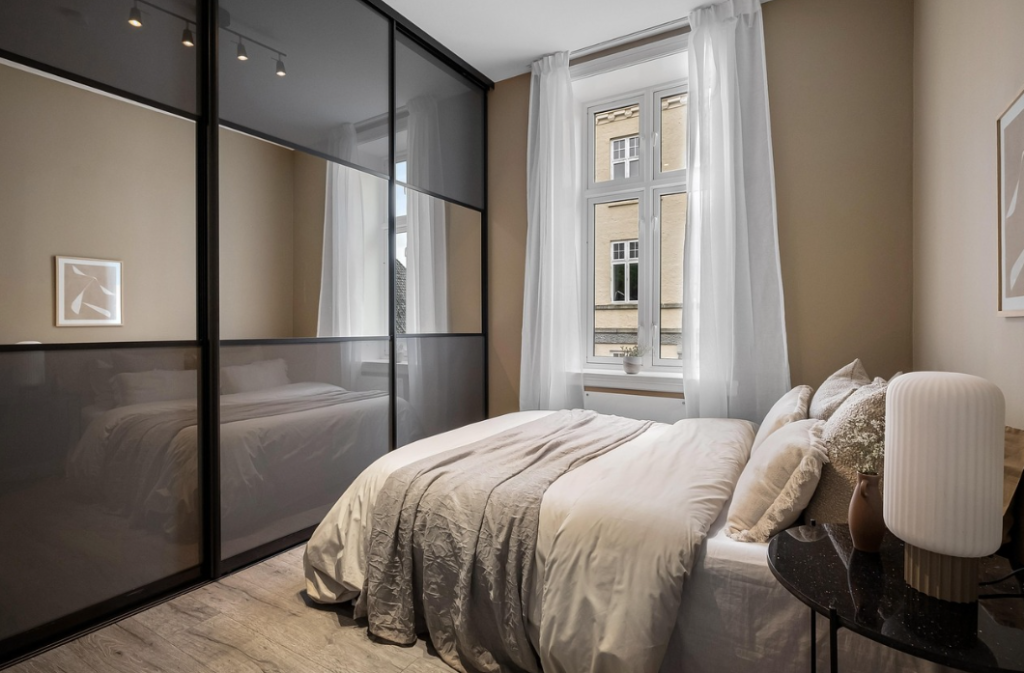
A tiny bedroom does not need a knockout wall to feel bigger. Mirrored sliding doors trick the eye into seeing more space while adding light and function to a tight closet setup.
Why Small Rooms Feel Even Smaller
A cramped bedroom often feels worse than its actual size because of a few common design mistakes. Dark corners, bulky furniture, and closed-off closets all add to that boxed-in feeling.
Common culprits include:
- Solid closet doors that block light and add visual weight
- Bulky swing doors that eat up floor space when open
- Dark or dated finishes that soak up light
- Furniture placed without thought to sightlines
Fixing even one of these issues can shift how the whole room feels.
How Mirrors Trick the Eye
Mirrors work because they bounce light and reflect the room back on itself, doubling the sense of depth. A large mirrored surface on a closet door does this without adding a single extra inch of real space.
Reflected light and depth combine to make a small room read as far more open than its true square footage.
Benefits of this trick include:
- More natural light bouncing around the room
- A sense of depth where a wall used to feel flat
- No lost floor space, since the mirror sits on the door itself
- A built-in full-length mirror with zero extra footprint
Why Sliding Beats Swinging in Tight Rooms
Swing doors need open floor space to move through their arc. In a small bedroom, that swing radius often blocks a bed, dresser, or walking path.
Sliding doors solve this problem directly:
- They glide along a track instead of swinging outward
- No floor space gets eaten up by an open door
- Furniture can sit closer to the closet without blocking access
- The flat surface stays flush with the wall, adding a clean look
Sliding tracks free up floor space that a swinging door would otherwise claim, which matters most in a truly tight room.
Style Options Beyond Plain Glass
Mirrored doors do not have to mean one giant plain mirror. There are style choices that add function and visual interest while still keeping that light-bouncing benefit.
Style options include:
- Framed mirror panels for a more finished look
- Frosted or etched edges for a softer visual effect
- Mixed panels, part mirror and part solid finish
- Bronze or smoked-tone mirror finishes for a warmer feel
Choosing a style that fits the room’s overall look keeps the mirror feeling like part of the design, not an odd add-on.
Placement Tips That Maximize the Effect
Where a mirrored door sits in a room changes how much benefit it delivers. A poorly placed mirror can even create an odd reflection instead of a helpful one.
Placement tips to keep in mind:
- Face the mirror toward a window to reflect natural light
- Avoid placing it directly across from a messy or cluttered wall
- Keep the mirror at a height that reflects the room, not just the ceiling
- Pair with lighter wall colors to boost the light-bouncing effect further
Getting placement right turns a simple door swap into a real room-changing upgrade.
A Practical Upgrade With Real Payoff
Swapping to mirrored sliding doors solves two problems at once: it adds function to a closet while making the whole room feel more open. It is one of the simpler upgrades that delivers a noticeable change without a full remodel.
If your bedroom feels tight and closed in, a closet door swap could be the fix. Keystone Home Products designs and installs custom mirrored sliding doors built to fit your exact space. Reach out to Keystone Home Products to see how this simple change can open up your room.