
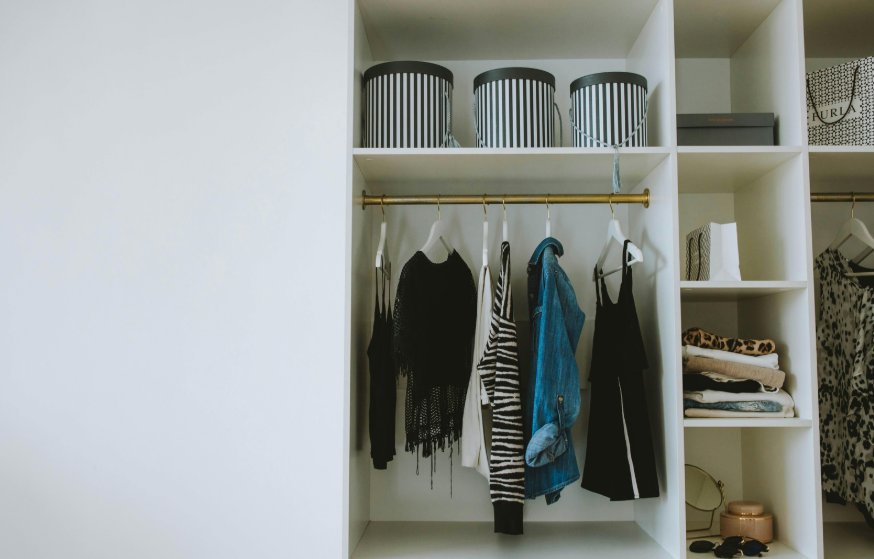
Closet mold develops when sufficient moisture remains on suitable materials. Common contributors include damp clothing, leaks, high indoor humidity, and condensation on cold surfaces. Tightly packed storage can restrict air movement and hide developing problems, but clutter alone does not create mold.
A closet organization system can support prevention by improving access, reducing overcrowding, and keeping belongings away from damp surfaces. However, it cannot repair a leak, correct inadequate insulation, or replace humidity control. Fix the moisture source first.
Why Can Closets Become Damp During Winter?
November and December bring wet coats, damp footwear, and colder exterior walls. Putting these items into an enclosed closet before they dry introduces moisture where air exchange may already be limited.
Condensation can also develop when humid indoor air contacts a sufficiently cold surface. Closets against exterior walls deserve attention, especially behind tightly packed clothing or storage boxes.
Watch for:
- Persistent musty smells.
- Damp fabric or cardboard.
- Condensation on nearby surfaces.
- Discoloured wall patches.
- Repeated moisture near the floor.
These signs warrant investigation rather than simply covering the smell.
How Does a Closet Organizer Help?
A well-planned organizer gives each category enough space without compressing everything into one crowded area. Dividing hanging garments, folded clothing, footwear, and seasonal items makes storage easier to manage.
Helpful design choices include:
- Hanging sections that allow separation between garments.
- Shelves sized for manageable stacks.
- Accessible shoe storage instead of floor piles.
- Dedicated seasonal storage that stays inspectable.
- Layouts that leave vulnerable surfaces visible.
The goal is not maximum storage at any cost. A closet filled beyond its practical capacity remains difficult to inspect and ventilate, regardless of how attractive the shelving looks.
Is Open Shelving Better for Airflow?
Open shelving can make air movement and inspection easier than densely packed, enclosed storage. Wire shelving also allows air to pass through the shelf surface rather than only around its edges.
However, shelving material alone does not prevent mold. Filling every opening with tightly packed fabric or boxes reduces that benefit.
Leave practical space around stored items, avoid pressing garments against cold walls, and keep the floor accessible for cleaning. Keystone Home Products offers closet organizers, including wire shelving and hanger rails, that can help create more manageable storage arrangements.
What Humidity Level Should You Aim For?
A useful indoor humidity target is generally 30 to 50 percent, while keeping relative humidity below 60 percent. However, colder surfaces may require lower indoor humidity to avoid condensation.
Use a humidity monitor rather than judging moisture by how the room feels. Check the closet as well as the adjoining room.
Dry wet coats and shoes before storing them. Address plumbing or roof leaks promptly, and investigate recurring condensation. Moisture absorbers may help in limited situations, but they are not substitutes for correcting an ongoing source.
What If Mold Is Already Present?
Do not install organizers over affected surfaces or move contaminated belongings into new cabinets without addressing the problem.
Identify the moisture source, assess the affected materials, and arrange appropriate cleanup. Larger, recurring, hidden, or extensively water-damaged areas may require professional assessment. Organization becomes useful once you’ve resolved the underlying issue.
Plan Better Storage With Keystone Home Products
Contact Keystone Home Products to discuss closet organizers that give clothing, shoes, and seasonal belongings practical space. The company offers shelving, hanger rails, and closet-door options suited to different storage needs. Explain any history of dampness so the layout can support access and inspection without concealing vulnerable areas. Resolve leaks or condensation first, then plan an organized closet that is easier to clean, maintain, and keep comfortably uncluttered throughout winter.