
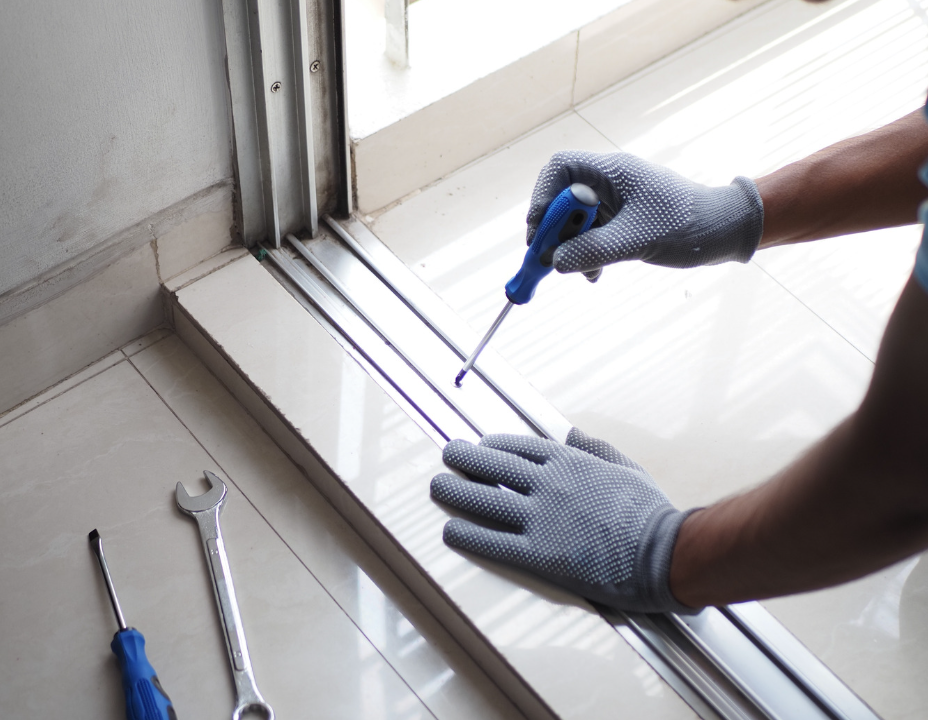
Sliding doors save floor space, but they depend on clean tracks, sound rollers, and correct alignment. Closet door tracks can stick, rattle, or let doors jump out of place when small issues go without care for too long.
1. Dust and Grit Build Up in the Track
Dust, pet hair, lint, and grit can settle in the track over time. When rollers run over that debris, doors may drag, make noise, or stop short. The buildup can also wear down rollers faster.
Use a vacuum with a narrow nozzle to clear loose dirt from the track. Follow with a soft cloth that is lightly damp, then dry the track before you test the door.
A clean track is the first step toward a smooth slide. Clean it every few months, or more often if pets, carpet, or heavy dust add debris to the room.
2. Rollers Wear Down or Crack
Rollers carry the door’s weight. If a wheel cracks, flattens, or wears unevenly, the door may pull to one side or come off the track. You may hear a clicking sound, feel a bump during travel, or notice that one side of the door sits lower.
Do not keep forcing a door that drags. The added strain can bend the track or loosen the mounting parts. A pro can remove the panel safely, inspect the roller set, and fit replacement parts that match the door system.
A worn roller can damage more than the door itself. Fixing it early may save the track and help the door stay aligned.
3. The Top Track Sits Out of Level
A track must sit level and line up with the lower guide. If it slopes or shifts, doors may roll open on their own, stop before the end, or rub against the jamb. Loose mounting screws can also let the track move over time.
Look at the door gaps along the top and sides. Uneven gaps, a door that drifts, or a panel that leans may point to an alignment issue. Do not tighten random screws without knowing how the system hangs.
A level track helps the door carry its weight evenly. If the opening is out of square, the right system and setup can make a major difference.
4. The Bottom Guide Moves or Breaks
Many sliding door systems use a floor guide to keep the bottom edge from swinging inward or outward. If the guide loosens, cracks, or shifts out of place, the door may wobble and the rollers may lose their path.
Check the floor guide during routine cleaning. Look for loose screws, gaps beneath the guide, or damage from vacuums, shoes, and furniture. If the door scrapes the floor or sways when you pull it, stop using it until the guide is checked.
A small floor guide has a big role in door control. A secure guide helps keep the panels straight and reduces stress on upper rollers.
5. The Track Gets Bent or Damaged
A bent track can pinch rollers and make a door feel heavy. Damage may happen when a panel comes off the track, furniture hits the rail, or someone forces a stuck door. Paint buildup and thick grime can also narrow the path enough to cause drag.
Inspect the full length of the track in good light. Look for dents, bent lips, dried paint, or rough spots. Do not strike the track with a hammer unless you know the system and can protect the finish.
Forcing a stuck door can turn a minor cleaning job into a track replacement. A trained installer can tell if the rail can be adjusted or if it needs to be replaced.
6. The Door Is Too Heavy for the System
A new mirror panel, thick wood door, or added trim can weigh more than the old hardware was built to hold. When the track or rollers do not match the door weight, the panel may sag, drag, or keep coming off its path.
Before you replace a closet door panel, check what the current track and rollers can support. This matters most for wide openings and mirrored doors. The whole system must work together: the track, rollers, floor guide, frame, and door panel.
Use these steps to lower track wear:
- Vacuum the tracks on a set schedule.
- Wipe the rails with mild soap and water.
- Use a dry silicone-based product if the maker allows it.
- Check screws and door gaps from time to time.
- Avoid hanging bags or items from the door frame.
The best way to prevent failure is to match the door to its hardware. A quality track cannot perform well if the panel is too heavy or installed out of line.
Keystone Home Products offers sliding doors with top or bottom roller options, and some systems include multiple panels or triple tracks for wider closets. Learn more about panel door systems and review the company’s sliding door hardware warranty before planning an upgrade.
If your closet door sticks, rattles, falls off its track, or leaves uneven gaps, contact Keystone Home Products for help. The team can assess the rollers, tracks, frame, and guide, then recommend repair or replacement options that fit your closet opening. Properly matched doors and hardware can help your closet run quietly and save floor space for years. Schedule a consultation with Keystone Home Products and stop fighting with a door that should slide with ease.